
Akiya and Zoning in Japan: A Practical Buyer’s Guide
What Is “Zoning” and What Is It For?
In simple terms, zoning is a set of rules that controls how land and buildings may be used. In Japan, land use zones are designated by local governments under the City Planning Act. These rules help prevent incompatible uses—such as heavy industry beside quiet housing—from being mixed in ways that could harm the local environment or quality of life.
Online zoning maps can be useful as a first check.
For example, look at the below image.
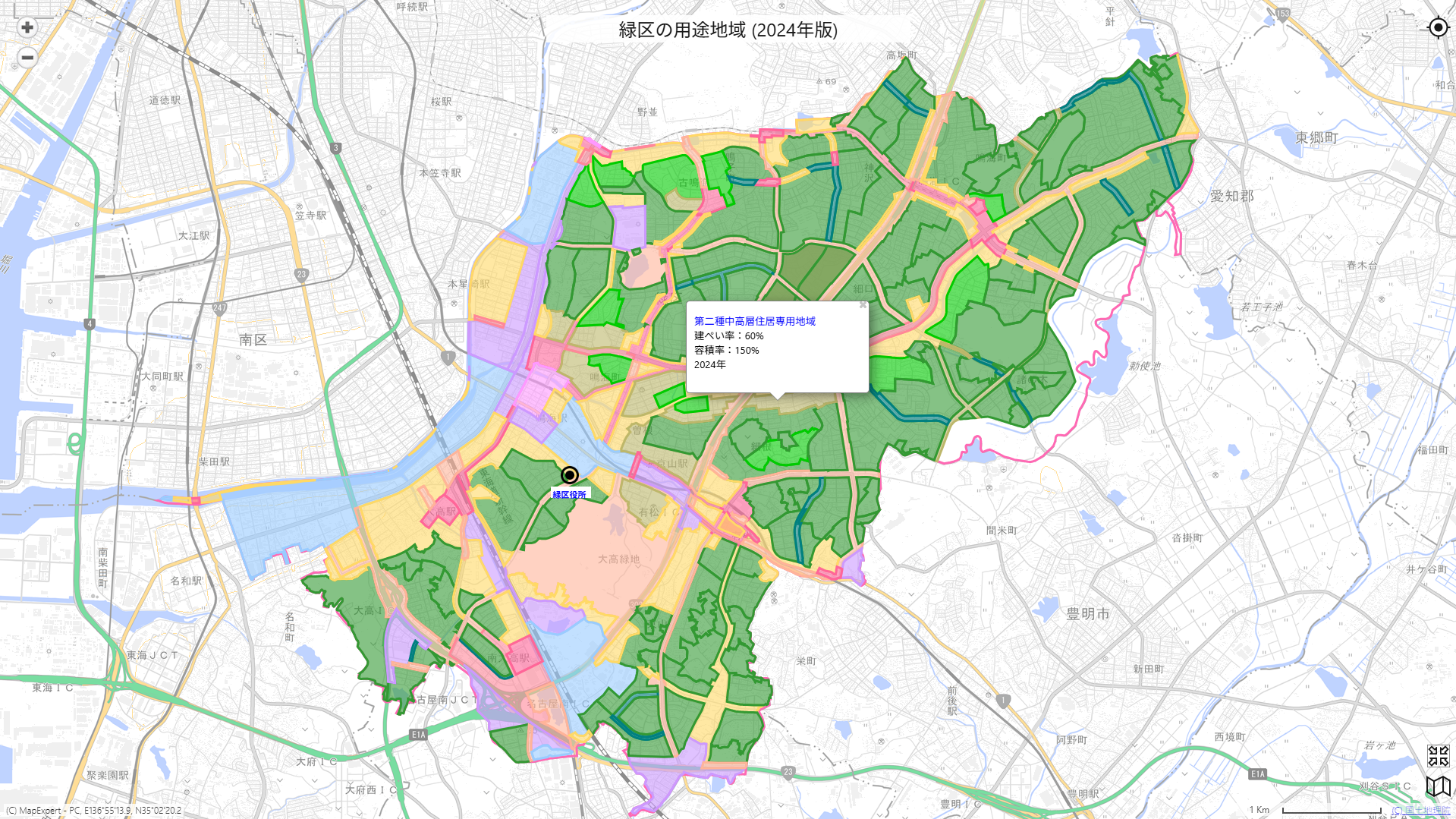
This image shows the different zones (indicated with different colours) within the Midori ward in the city of Nagoya, Aichi Prefecture and showcases how properties in the same ward can fall into different zones, and how even neighbouring lots may be subject to different restrictions. Treat online maps as a starting point, then confirm the official zoning information with the local municipality or a qualified professional. If your intention is to use the property as a place of residence, then generally there are no issues and buyers only need to pay close attention if they intend to set up a hotel, Airbnb or similar temporary accommodation.
The Thirteen Land Use Zones
Japan’s land use zones are generally grouped into residential, commercial, and industrial categories. Historically there were twelve main zones, but a thirteenth category, the Countryside Residential Zone, was added in 2018. For akiya buyers, these categories can affect whether a building may be used as a residence, shop, lodging facility, restaurant, workshop, warehouse, or other business.
The residential zones are likely to be the most relevant for many readers, especially those considering an akiya for personal use or small-scale rental use. However, even within residential areas, the permitted building uses and business activities vary significantly.
Quick Comparison of Japan’s Land Use Zones
The table below gives a simplified overview of the 13 land use zones and how they may affect common akiya plans. It is only a starting point: actual permitted use depends on the specific property, building condition, local ordinances, and licensing requirements. A more detailed description of each zone follows.
| Zone | General character | Typical akiya suitability | Buyer caution |
|---|---|---|---|
| Category I Low-rise Residential Zone | Quiet, low-rise housing | Good for living; limited home-based use | Lodging, shops, and business use may be tightly restricted |
| Category II Low-rise Residential Zone | Low-rise housing with small neighbourhood services | Good for living; some small shop use may be possible | Check floor area limits and permitted business type |
| Category I Mid/high-rise Oriented Residential Zone | Medium- to high-rise residential area | Suitable for living; some larger services may be possible | Confirm limits for shops, offices, and lodging use |
| Category II Mid/high-rise Oriented Residential Zone | Residential area with broader convenience facilities | Suitable for living and some mixed-use plans | Check whether the intended use fits size and activity limits |
| Category I Residential Zone | Residential area allowing wider non-residential uses | Often more flexible for cafés, offices, or accommodation | Hotel or shop use may still be subject to scale limits |
| Category II Residential Zone | Residential area with a broader mix of facilities | Potentially useful for rental, lodging, or small business ideas | Confirm local rules for entertainment, lodging, and noise-sensitive uses |
| Quasi-residential Zone | Roadside residential area with service facilities | May suit roadside businesses or mixed residential use | Traffic, noise, and road access should be checked carefully |
| Countryside Residential Zone | Low-rise housing integrated with agriculture | Good for rural-style living or agriculture-related use | Business use may need to relate to agricultural convenience |
| Neighbourhood Commercial Zone | Daily shopping and local services | Flexible for shops, cafés, offices, and residential use | Check parking, signage, noise, and licensing rules |
| Commercial Zone | High-activity commercial district | Flexible for business, lodging, and mixed-use projects | May be busier, noisier, and less residential in feel |
| Quasi-industrial Zone | Light industry and service facilities | May suit workshops, studios, warehouses, or mixed-use projects | Check neighbouring uses, noise, smells, and environmental concerns |
| Industrial Zone | General industrial use | Possible for some residential or shop use, but usually less attractive for living | Schools, hospitals, and hotels are not permitted; living environment may be poor |
| Exclusively Industrial Zone | Factory-only industrial area | Generally unsuitable for akiya residential plans | Residential buildings, shops, schools, hospitals, and hotels are not permitted |
Category I Low-rise Residential Zone (第一種低層住居専用地域)
This is one of the strictest residential zones and is intended to protect quiet, low-rise living environments. Detached houses, schools, and small home-based shops or offices may be permitted, but larger commercial, lodging, and entertainment uses are usually restricted. Height limits are also common, often around 10m or 12m, depending on the local designation.
Category II Low-rise Residential Zone (第二種低層住居専用地域)
This zone is also mainly for low-rise housing, but it allows a slightly wider range of neighbourhood services than Category I. In addition to homes and schools, certain small shops may be permitted, often subject to floor-area limits. It can be suitable for buyers who want a quiet residential setting with limited local convenience uses nearby.
Category I Mid/high-rise Oriented Residential Zone (第一種中高層住居専用地域)
As the name suggests, this zone is intended for medium- and higher-rise residential buildings, such as apartment blocks. Compared with low-rise residential zones, it generally allows a broader range of facilities, including larger shops, hospitals, and universities. For akiya buyers, this may mean better access to services and public facilities, but also a busier surrounding environment.
Category II Mid/high-rise Oriented Residential Zone (第二種中高層住居専用地域)
This zone is still residential in character, but it permits a wider range of convenience facilities than Category I Mid/high-rise Oriented Residential Zone. Activities that create significant noise or attract large numbers of visitors may still be restricted. If you are considering a guesthouse, café, or other visitor-facing use, check the specific permitted use, floor-area limits, and local ordinances before relying on the zoning category alone.
Category I Residential Zone (第一種住居地域)
Although this is still a residential zone, it allows a wider range of non-residential uses while maintaining protection for the living environment. Shops, offices, hotels, and similar buildings may be permitted up to certain scale limits. However, entertainment venues and large facilities may still be restricted, and the local environment may be noisier than in stricter residential zones.
Category II Residential Zone (第二種住居地域)
This zone continues to protect the residential environment but allows a broader mix of uses, including shops, offices, hotels, and some entertainment facilities. It can be more flexible for rental, lodging, or small business plans than stricter residential zones, but it may also bring more traffic, noise, and pedestrian activity. Buyers seeking a quiet home should assess the surrounding streets carefully, not just the zoning label.
Quasi-residential Zone (準住居地域)
This zone is often found along major roads and is designed to balance residential use with roadside services, including auto-related facilities. It may allow a wider mix of commercial uses than stricter residential zones. For akiya buyers, the main questions are whether the property is comfortable as a home and whether road noise, traffic, parking, and access will support the intended use.
Countryside Residential Zone (田園住居地域)
Added in 2018, this zone is intended to protect good low-rise residential environments while also supporting agriculture in urban areas. It may permit homes as well as certain shops, restaurants, storage facilities, and other buildings connected to agricultural convenience.
Neighbourhood Commercial Zone (近隣商業地域)
This zone is intended for shops and services used by nearby residents, such as daily shopping facilities, restaurants, and small offices. Homes, shops, and some small factories may be permitted. It can be attractive for buyers considering a café, studio, office, or mixed home-and-business use, but practical issues such as parking, signage, opening hours, and neighbour relations still matter.
Commercial Zone (商業地域)
This zone is focused on commercial activity, including offices, restaurants, shops, cinemas, banks, and department stores. Residential buildings are still possible, but the surrounding environment is likely to be busier and more commercially oriented. For akiya projects, this zone may offer flexibility for lodging or business use, but buyers should consider noise, foot traffic, neighbouring businesses, and long-term liveability.
Quasi-industrial Zone (準工業地域)
This zone allows light industrial activities and service facilities while restricting uses that may cause serious environmental impact. It may suit workshops, studios, storage, small manufacturing, or mixed-use projects. However, buyers should pay close attention to nearby factories, traffic, noise, odours, and any environmental issues that could affect residential comfort or resale value.
Industrial Zone (工業地域)
This zone is intended for general industrial use. Some residential and shop uses may still be possible, but schools, hospitals, and hotels are not permitted. Akiya buyers should be cautious: even if a house exists in an industrial zone, the surrounding environment may not be suitable for residential living or guest accommodation.
Exclusively Industrial Zone (工業専用地域)
As the name suggests, this zone is reserved for industrial buildings such as factories. Residential buildings are not permitted, making it generally unsuitable for akiya buyers who want to live in, rent out, or operate lodging from the property.
Beyond Zoning: Other Rules to Check

The thirteen zoning categories are set within Japan’s national planning framework, but many practical restrictions are applied locally. This means a property in a zone that appears to allow hotels, shops, or guest accommodation may still be limited by local ordinances, building standards, fire safety rules, road access requirements, neighbourhood agreements, or licensing procedures. This is especially important for minpaku and other lodging businesses, where national rules may be supplemented by local restrictions.
Building Coverage Ratio (建蔽率): This limits how much of the land can be covered by the building footprint. For example, if a 100m2 plot has a building coverage ratio of 50%, the maximum building footprint is generally 50m2. This affects whether an existing building can be expanded or whether a replacement building could be the same size.
Floor-Area Ratio (容積率): This limits the total floor area of the building compared with the land area. For example, if a 100m2 plot has a floor-area ratio of 200%, the total floor area is generally limited to 200m2. This is important when considering extensions, rebuilding, or converting a small house into a larger commercial or lodging facility.
Road access and “rebuildability”: Akiya buyers should also confirm whether the land legally fronts an eligible road. If road access is insufficient, rebuilding or major renovation may be restricted even when the zoning category appears suitable.
Minpaku and lodging use: Short-term rental operation is not determined by zoning alone. Operators may need to comply with the Private Lodging Business Act, the Inns and Hotels Act, fire safety rules, condominium rules where relevant, and local ordinances. Some areas may restrict operating days, locations, or management requirements.
Akiya Zoning Due Diligence Checklist

· Confirm the official land use zone with the local municipality, not only an online map.
· Check whether the intended use is residential, rental, minpaku, hotel, café, office, workshop, or another business use.
· Ask whether the existing building use is legal, non-conforming, or subject to special conditions.
· Review building coverage ratio, floor-area ratio, height limits, fire prevention zones, and road access.
· Confirm whether renovation, extension, rebuilding, or change of use would require permits.
· For lodging or short-term rental use, check national licensing rules and local ordinances before assuming the property can operate as accommodation.
· Consider practical liveability: noise, traffic, parking, nearby factories, neighbouring businesses, and community expectations.
Conclusion
In summary, understanding Japan’s zoning system is an important first step in deciding how an akiya can be used after purchase. However, zoning is not the only factor that determines land or building use. If you are buying a home mainly to live in, such as a holiday home or private residence, zoning is usually less of a concern. If you plan to operate a small hotel, Airbnb, guesthouse, café, or other business, you should check the applicable zoning, building rules, licensing requirements, and local ordinances before committing to the purchase. We can help confirm whether any restrictions may affect your property, so please do not hesitate to ask if you have concerns.